The best way to clean and maintain a basement epoxy floor in the KC Metro is to sweep weekly with a microfiber dust mop and mop monthly using hot water mixed with a half-cup of clear ammonia. Never use dish soap, oil-based cleaners, or heavy detergents, as these leave a microscopic chemical film that traps ambient basement moisture and creates a severe slip hazard.
Maintaining an epoxy floor is fundamentally different from cleaning tile, carpet, or bare concrete. Because professional polyaspartic and epoxy floors are completely non-porous, dirt, spills, and moisture cannot penetrate the surface. Everything sits directly on top of the clear coat. This waterproof nature makes the floor incredibly easy to clean, provided you use the exact right tools and avoid destructive household chemicals.
The Chemical Reality of KC Metro Basements
Basements in Johnson County present unique environmental challenges. The heavy clay soils surrounding homes in Olathe, Overland Park, and Lenexa trap massive amounts of water during spring thunderstorms. This creates high hydrostatic pressure against your foundation.
According to the Environmental Protection Agency (EPA) guidelines on indoor moisture, basements naturally harbor high humidity levels due to their subterranean environment and thermal mass. When the muggy Kansas summer air enters a cool basement, invisible condensation forms on hard surfaces.
If you use the wrong cleaning chemicals on an epoxy floor in a damp environment, you will create a sticky, dangerous mess. Traditional soaps trap this condensation, turning your pristine basement floor into an ice rink.
The Step-by-Step Routine Maintenance Protocol
Professional floor coatings require mechanical cleaning, not chemical scrubbing. Follow this exact protocol to keep your basement floor looking factory-new.
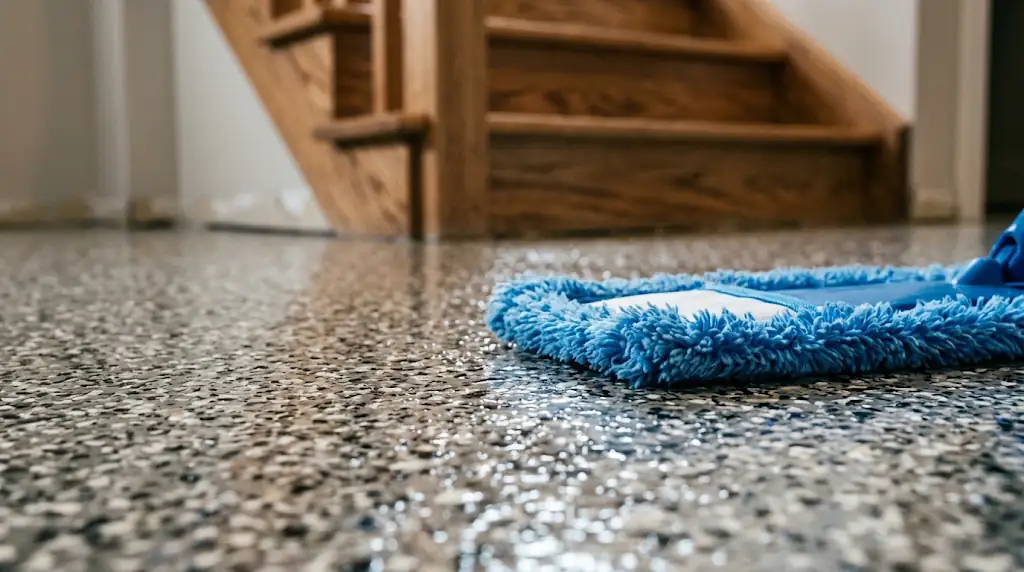
- Dry Dusting (Weekly): Use a wide, commercial-grade microfiber dust mop to sweep the floor. Microfiber generates static electricity, which pulls dust, pet hair, and dirt off the floor without scattering it into the air.
- Spot Cleaning (As Needed): Wipe up spilled drinks, pet accidents, or mud immediately using a simple paper towel or a soft cloth. The waterproof coating prevents these liquids from staining the concrete.
- Wet Mopping (Monthly): Fill a bucket with one gallon of very hot water and add four to five ounces (about half a cup) of clear, non-sudsing ammonia. Mop the floor using a synthetic mop head.
- Squeegee to Dry: Do not let the water air-dry. Use a wide foam squeegee to push the dirty water directly into your basement floor drain, or wipe the floor dry with a clean microfiber towel.
Never use a string mop. Traditional cotton string mops simply push dirty water around and leave lint trapped in the textured surface of a full-flake epoxy floor.
Approved Cleaners vs. Destructive Chemicals
The fastest way to ruin a professional polyaspartic or epoxy clear coat is by using the wrong chemistry. Store-bought floor cleaners are typically engineered for porous surfaces like wood or unsealed tile, not for industrial-grade polyurea.
| Cleaning Chemical | Safe for Epoxy? | The Chemical Result |
| Clear Ammonia | Yes | Highly alkaline. Cuts through grease and dirt, then completely evaporates without leaving any residue. |
| Simple Green | Yes | An excellent degreaser for heavy mud or stubborn spills. Must be heavily diluted with hot water. |
| Dish Soap (Dawn, etc.) | No | Leaves a dense soapy film. Attracts dirt and becomes dangerously slippery when exposed to basement humidity. |
| Citrus Cleaners | No | Contains d-limonene, an aggressive solvent that will slowly eat away at the polyaspartic clear coat, causing it to dull. |
| White Vinegar | No | Vinegar is a mild acid. Repeated use will chemically etch the high-gloss finish, leaving permanent dull spots. |
| Bleach | No | Highly corrosive. Will permanently discolor the decorative flakes and degrade the resin. |
Managing Floor Condensation in Shawnee and Gardner
During July and August, the ambient humidity in the Kansas City area frequently exceeds 80%. Because your basement concrete sits below ground, the slab remains exceptionally cool. When warm, humid air flows down your basement stairs, it hits the cold epoxy floor and creates condensation—a process known as “sweating.”
This is not a flaw in the epoxy; it is basic thermodynamics. A sweaty epoxy floor is slippery and tracks wet footprints through your house.
To maintain the floor and ensure safety during peak summer humidity in Shawnee, Gardner, or Leawood, you must run a mechanical dehumidifier. Set the dehumidifier to maintain a relative indoor humidity of 45% to 50%. This completely eliminates floor condensation, keeping the epoxy completely dry and safe to walk on.
Flood Recovery: Sump Pump Failures and Heavy Rain
Kansas City spring storms often overwhelm residential drainage systems. If your sump pump fails or your basement floods in De Soto, an epoxy floor is your best defense against catastrophic water damage.
Unlike carpet, which must be ripped out and thrown away, or laminate flooring, which swells and warps, an epoxy floor is 100% waterproof. The concrete beneath the coating remains completely dry.
If your basement floods, execute the following recovery steps:
- Remove the Water: Use a wet/dry shop vacuum or a heavy-duty foam squeegee to push the standing water directly into the floor drain.
- Sanitize the Surface: Mix one gallon of hot water with a half-cup of Simple Green or a dedicated alkaline concrete floor cleaner. Mop the entire area to remove silt, mud, and bacteria left behind by the floodwaters.
- Dry the Room: Place high-velocity floor fans across the room and lower the setting on your dehumidifier to aggressively pull the remaining moisture out of the air. Your floor will be perfectly intact and ready to use the same day.
Preventative Protection for Basement Furniture
While polyaspartic clear coats are heavily resistant to abrasion, they are not indestructible. The immense weight of basement furniture can scratch the surface if dragged.
- Place heavy-duty felt pads under the legs of heavy couches, pool tables, and television stands.
- If you use rolling office chairs in a basement home office, swap the hard plastic casters for soft polyurethane rollerblade-style wheels. Hard plastic wheels grind dirt directly into the clear coat over time.
- Place a high-quality, rubber-backed doormat at the bottom of the basement stairs to catch abrasive dirt and sand before it reaches the epoxy.
Keep Your Johnson County Basement Flawless
A professional floor coating completely transforms a damp, dusty basement into clean, usable living space. By using simple hot water, ammonia, and a microfiber mop, you guarantee your floor will maintain its high-gloss, showroom finish for decades.
If you are tired of dealing with dusty bare concrete or ripped carpets in your basement, we install permanent, waterproof polyaspartic floor systems designed to handle the specific moisture challenges of the Midwest. Contact Olathe Epoxy Flooring today. Visit our contact page to schedule a free measurement and quote for your home.