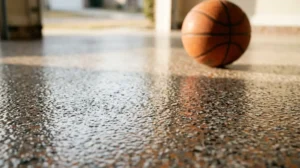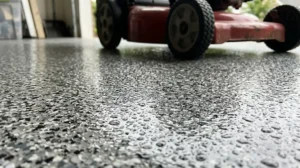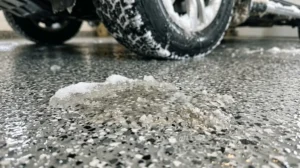
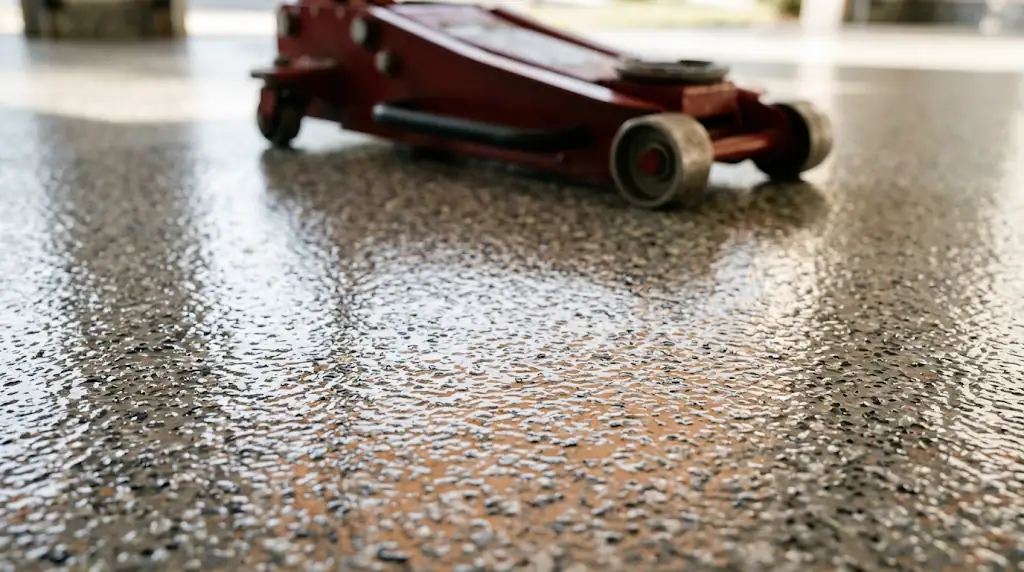
Professionally installed polyaspartic and epoxy garage floors in Johnson County last 15 to 20 years under heavy residential use. Interior basement applications routinely last 20 to 30 years without degrading. Conversely, DIY hardware store epoxy kits typically fail within 1 to 3 years due to inferior water-based chemistry and insufficient mechanical concrete preparation.
The longevity of a concrete coating is not determined by the paint roll; it is dictated by the chemical composition of the resin and the exact method used to prepare the underlying slab. For homeowners in Olathe, Overland Park, and Lenexa, surviving the aggressive Midwestern climate requires industrial-grade materials engineered for extreme thermal shock.
Expected Lifespan by Floor Coating System
Different chemical formulations yield drastically different lifespans. Understanding the specific material being applied to your floor is the only way to accurately forecast its durability.
| Coating System | Expected Lifespan | Primary Causes of Eventual Failure |
| DIY Water-Based Epoxy | 1 to 3 Years | Hot-tire pickup, UV yellowing, peeling from moisture vapor, and peeling from acid-etch failure. |
| Standard 100% Solids Epoxy | 10 to 15 Years | Micro-cracking due to rigidity, UV yellowing, and degradation from sustained chemical exposure. |
| Polyaspartic Full-Flake System | 15 to 20+ Years | Extreme structural foundation failure or severe impact damage from heavy machinery. |
| Basement Polyaspartic Floor | 20 to 30+ Years | Negligible UV exposure and lack of vehicle traffic extend the lifespan indefinitely. |
How Kansas Weather Dictates Floor Longevity
The Kansas City Metro subjects garage floors to extreme environmental stress. The National Weather Service in Kansas City documents intense thermal variance, with winter temperatures frequently plunging below zero and summer highs regularly exceeding 100°F.
This thermal shock forces your concrete garage slab into a continuous cycle of expansion and contraction. The lifespan of your floor coating depends entirely on how it handles this movement.
Traditional epoxy cures into a highly rigid, brittle plastic. When the concrete beneath it expands during a July heatwave in Leawood or contracts during a January freeze in De Soto, rigid epoxy cannot stretch. The molecular bond breaks, causing the epoxy to snap, crack, and flake away from the concrete.
Polyaspartic coatings cure with built-in high elongation metrics. The aliphatic polyurea remains highly elastic at a molecular level. It stretches and flexes in perfect tandem with the shifting concrete slab, entirely bypassing the stress fractures that destroy traditional epoxy floors.
The Subterranean Threat: Wymore-Ladoga Clay
The lifespan of your floor coating cannot exceed the structural lifespan of the concrete slab beneath it. The heavy Wymore-Ladoga clay dominant throughout Johnson County poses a constant threat to concrete integrity.
This soil absorbs massive amounts of moisture during spring thunderstorms and evaporates aggressively during dry summers. This shrink-swell cycle leaves voids beneath your garage and basement floors, causing the concrete to settle and crack.
A professional installation guarantees a 20-year lifespan by addressing this subterranean movement before pouring any resin. Installers route out all existing faults with a diamond V-blade and inject rapid-curing polyurea joint filler. This structurally welds the cracked slabs back together. If you apply an epoxy coating over open cracks, the kinetic energy of the shifting Kansas clay will instantly tear the new coating precisely along the fault line.
Why Professional Floor Preparation Lasts Decades
The number one reason garage floors fail within 36 months is improper surface preparation. Concrete is incredibly smooth and naturally resists chemical bonding.
To achieve a permanent mechanical bond, the International Concrete Repair Institute (ICRI) dictates that concrete must be profiled to a specific texture, known as a Concrete Surface Profile (CSP). For industrial floor coatings to last 20 years, the concrete must reach a CSP of 2 or 3, which mimics the texture of medium-grit sandpaper.
DIY kits instruct homeowners to achieve this profile using muriatic acid and water. Acid etching is a universally failed preparation method for residential garages. It simply cleans the surface without physically opening the deep pores of the concrete. Furthermore, it saturates the concrete with water, guaranteeing future delamination as the moisture tries to evaporate beneath the new epoxy.
Professional installers exclusively use massive, walk-behind planetary diamond grinders connected to HEPA vacuums. These 400-pound machines physically shave off the top layer of the concrete paste, exposing the open, dry capillary system beneath. When liquid polyaspartic resin is poured over diamond-ground concrete, it wicks deep into these open pores and cures, creating permanent, unbreakable “roots.”
Defeating UV Yellowing on Garage Aprons
A garage floor is not entirely shielded from the sun. The lip of the concrete that extends just past your garage door, and the first few feet of the interior floor, are battered by direct UV radiation every time the door is open.
Standard epoxies possess zero UV resistance. The chemical amine hardeners react violently to ultraviolet light, causing a clear topcoat to turn amber, yellow, and chalky within 18 months. This UV degradation physically weakens the resin, accelerating its inevitable failure.
Polyaspartic topcoats are 100% aliphatic, meaning they are chemically immune to UV light. A polyaspartic floor installed in a south-facing garage in Gardner or Shawnee will remain perfectly clear and maintain its original structural density for two decades without yellowing.
The Immunity to Hot-Tire Pickup
The most common failure point for cheap epoxy is hot-tire pickup. When you drive on highway asphalt during a Johnson County summer, your vehicle tires absorb immense heat. When you park a 4,000-pound vehicle on a standard water-based epoxy floor, the heat transfers from the rubber directly into the resin, softening it.
As the tire cools overnight, it permanently fuses to the soft epoxy. Reversing the vehicle the next morning physically rips the coating off the concrete.
Polyaspartic and 100%-solids hybrid systems are highly heat resistant. Because the chemical cross-linking is exceptionally dense, the resin never softens under the weight of hot tires. You can park heavy SUVs, heavy-duty trucks, and riding mowers on the surface indefinitely without risking delamination.
Maximize the 20-Year Lifespan of Your Garage Floor
While professional polyaspartic floors are heavily armored against road salts, magnesium chloride, and extreme temperatures, basic maintenance extends their flawless appearance indefinitely.
To ensure your floor lasts 20 years, follow these strict maintenance rules:
- Sweep Out Sand: Silica sand and small rocks dragged in by tires act like loose sandpaper. Sweep them out weekly to prevent micro-scratches on the clear coat.
- Wipe Up Spills: While the floor is impervious to motor oil, transmission fluid, and antifreeze, wipe up heavy chemical spills within 24 hours to prevent a localized slick spot.
- Avoid Detergents: Never clean the floor with dish soap, citrus solvents, or vinegar. Mop only with hot water and a half-cup of clear ammonia.
- Squeegee Winter Slush: Use a foam squeegee to push standing water and melted snow directly out of the garage.
Invest in a Permanent Floor System
You do not have to coat your garage floor every three years. By rejecting inferior DIY chemistry and demanding heavy mechanical preparation, you can secure a floor that easily outlasts the harsh extremes of the Midwest.
We engineer our floor systems specifically to handle the temperature swings, expansive clay soils, and heavy vehicle traffic of the Kansas City Metro. Contact Olathe Epoxy Flooring today to permanently protect your concrete. Visit our contact page to schedule a free measurement and quote for your home in Olathe, Overland Park, Lenexa, Shawnee, Gardner, Leawood, or De Soto.