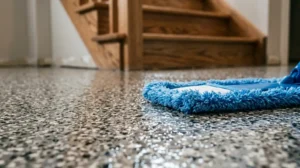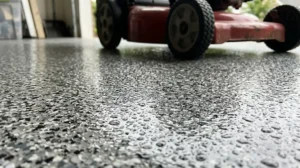
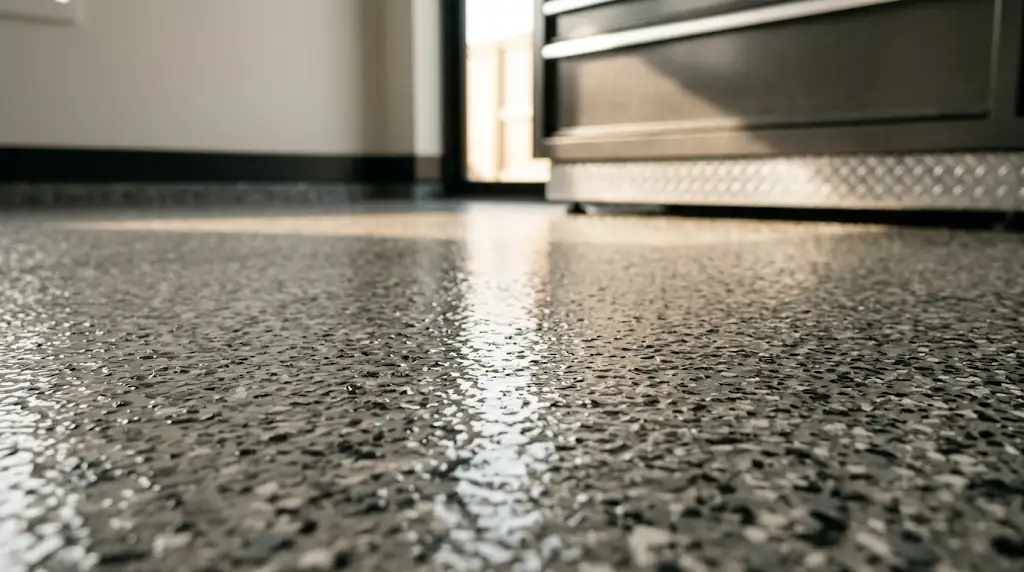
Installing a professional epoxy garage floor in Johnson County, KS, typically costs between $2,000 and $5,400 for a standard two-car garage. This translates to an average of $3.00 to $12.00 per square foot, depending on the condition of your existing concrete, the level of surface preparation required, and the specific coating system you select.
For homeowners in Olathe, Overland Park, and the surrounding areas, calculating the exact price requires looking beyond the square footage. Local environmental factors, specific material choices, and the structural integrity of your concrete all play a role in the final invoice.
Epoxy Garage Floor Cost Breakdown by Garage Size
The physical footprint of your garage is the baseline metric for any flooring quote. Most residential garages fall into three standard sizes. Here is the expected price range for a standard, professionally installed flake epoxy system:
| Garage Size | Average Square Footage | Estimated Cost Range |
| 1-Car Garage | 200 – 300 sq. ft. | $600 – $3,600 |
| 2-Car Garage | 400 – 600 sq. ft. | $2,000 – $5,400 |
| 3-Car Garage | 700 – 900 sq. ft. | $2,100 – $10,800 |
These baseline numbers cover a standard installation on concrete that is in relatively good condition. However, a bare concrete slab in Eastern Kansas is rarely flawless.
The Impact of Eastern Kansas Soil on Your Installation Costs
One of the largest hidden variables in garage floor pricing is the condition of your existing concrete slab. The Kansas Geological Survey identifies expansive soil as a pervasive problem in Kansas, particularly in areas underlain by heavy clay deposits. As these clay soils absorb moisture during wet springs and evaporate during dry summers, they expand and shrink aggressively.
This continuous soil movement directly impacts your garage floor, often resulting in:
- Spider Cracking: Fine, web-like cracks across the surface that must be chased and filled with polyurea joint filler before coating.
- Slab Settlement: Uneven sections of concrete that require leveling or aggressive mechanical grinding to create a completely seamless finish.
- Pitting and Spalling: Surface damage caused by shifting pressure and freeze-thaw cycles that must be professionally patched.
Repairing damage caused by expansive clay soils requires significant labor and premium materials. If your garage floor has extensive cracking or pitting, expect your installation cost to shift toward the higher end of the $3.00 to $12.00 per square foot range. A floor coating is only as strong as the substrate beneath it.
Cost by Coating System: Epoxy vs. Polyaspartic
The type of chemical coating system you choose directly dictates both the upfront price and the long-term longevity of the floor. There is no single “epoxy” solution. Professional installers utilize different formulations based on your budget, return-to-service requirements, and UV exposure.
| Coating System | Cost Per Sq. Ft. | Durability & Features |
| Standard Epoxy (Solid Color) | $3.00 – $5.00 | Excellent baseline durability. Susceptible to UV yellowing over time if exposed to direct sunlight. |
| Epoxy Base with Flake & Polyurethane Topcoat | $5.00 – $8.00 | High durability. The decorative flakes hide dirt and imperfections, while the clear topcoat provides chemical and abrasion resistance. |
| Polyurea / Polyaspartic | $7.00 – $12.00 | Premium durability. Rapid curing time (often a 1-day installation). 100% UV stable, highly flexible, and heavily resistant to hot-tire pickup. |
| Metallic Epoxy | $9.00 – $14.00+ | Highly customized, marbled appearance. Labor-intensive installation. Best for interior showrooms rather than heavy-duty residential workshops. |
For most garages in Lenexa, Shawnee, and Gardner, a full-flake system with a polyaspartic topcoat provides the absolute best return on investment, balancing high aesthetic appeal with industrial-grade durability.
Hidden Factors That Influence Your Final Quote
Beyond the size of the garage and the type of coating, several specific site conditions will dictate your final installation cost:
- Diamond Grinding and Shot Blasting: Professional installers do not rely on acid etching. They utilize heavy machinery to mechanically diamond grind the concrete. If your concrete is excessively hard or has a pre-existing, failing paint coating that must be stripped away, labor costs will increase.
- Moisture Mitigation: Concrete is highly porous. If ground moisture vapor transmission from the soil is too high, it will force the epoxy to delaminate and peel. Installers perform moisture tests and may need to apply a specialized moisture vapor barrier primer, adding $1.00 to $2.50 per square foot.
- Stem Walls and Steps: Coating the vertical concrete borders (stem walls) or the cinderblock steps leading into your home requires tedious, manual brushwork. This is generally billed as an additional line item.
- Customization: Custom flake blends, custom-colored metallic pigments, or embedded logos require specialized materials and extra application time.
Why Kansas Weather Makes Professional Installation Necessary
The climate in the Kansas City metro area is hostile to bare concrete. Summers are extremely muggy, while winters are snowy and very cold. This extreme temperature variance creates a punishing environment for unsealed garage floors.
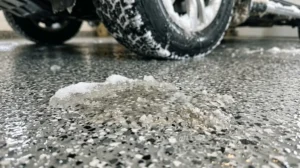
When you drive your vehicle into the garage during January or February, the tires bring in snow, ice, and corrosive road salts. As the snow melts, the saltwater seeps deep into the porous concrete. When temperatures drop below freezing again, that trapped water expands, physically breaking apart the surface of the concrete in a destructive process called spalling.
A professional epoxy or polyaspartic coating creates an impermeable, waterproof barrier. The salt, slush, and automotive fluids sit safely on top of the coating where they can be easily squeegeed or mopped away without ever touching the actual concrete. Attempting to survive a Johnson County winter with an unprotected, unsealed concrete garage floor dramatically accelerates the structural degradation of the slab.
DIY vs. Professional Installation: Is the Savings Worth It?
Hardware stores sell DIY epoxy kits for $100 to $300. While the price difference between a cheap DIY kit and a professional installation is massive, the failure rate of DIY kits is equally high.
DIY kits fail because they utilize thin, water-based epoxy paints. Furthermore, homeowners typically prep the floor using a chemical acid etch rather than heavy mechanical grinding. Acid etching simply does not open the pores of the concrete aggressively enough for the epoxy resin to form a permanent mechanical bond.
When a hot car tire parks on a poorly prepped, water-based DIY epoxy floor, the heat of the tire softens the coating. When the car reverses, the tire literally rips the epoxy away from the concrete—a common failure known as hot-tire pickup.
Professional installers use 100% solids epoxy or polyurea formulas that cure thick, hard, and chemically bond deep into the mechanically ground concrete pores. You pay for the heavy machinery, the industrial-grade chemistry, and the expert labor required to guarantee the floor will not peel under pressure.
Securing a Quote for Your Johnson County Home
The cost of an epoxy garage floor is a direct investment in the value, cleanliness, and protection of your home. Whether you need a simple solid color coating to seal out winter road salts, or a premium polyaspartic flake system for a high-end aesthetic, the right floor will drastically improve your daily routine.
Every concrete slab is unique. To get an exact, down-to-the-penny cost for your specific garage in Olathe, Overland Park, Lenexa, Shawnee, Gardner, Leawood, or De Soto, you need an on-site evaluation. We will assess the moisture levels, evaluate any expansive clay soil damage, and measure the exact square footage.
Contact Olathe Epoxy Flooring today to schedule your consultation. Visit our contact page to request a free, no-obligation measurement and quote for your garage.